Blog: How bacteria survive antibiotics
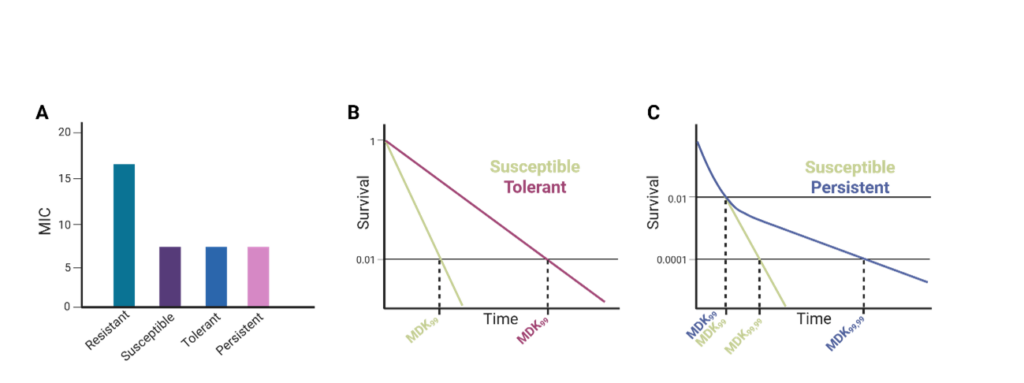
How bacteria survive antibiotics: Resistance, Tolerance and Persistence. Have you ever wondered how sometimes, after a “killer dose” of antibiotics, a small fraction of bacteria just… hang on? And no, …
One of the SSBB Doctoral Candidates published a review about the mechanisms, effects, and applications of HMOs and polyphenols in allergies. In this review, we outline the basic biology of …
Publication: HMOs and polyphenols: Mechanisms, effects, and applications in allergies Read More »
Today was a very special day for the Stop Spread Bad Bugs Consortium. We had the joy of celebrating Saha Satvati’s PhD defense at the Università di Siena, where she …
As part of his training in Liège, Belgium, Jarod Farruggia participated in a nationwide competition, “My thesis in 180 seconds”. This event invites the participants to explain in simple terms …
We are proud to announce that Felipe Gama Franceschi has been selected to participate in the 75th Lindau Nobel Laureate Meeting! This Lindau Nobel Laureate Meeting is an interdisciplinary meeting …
Felipe selected for the 75th Lindau Nobel Laureate meeting Read More »
The SSBB project have published the results from a collaborative study of different consortium partners. In this study, the potential of biosynthesized cellulose membranes as drug carriers to present antimicrobial …
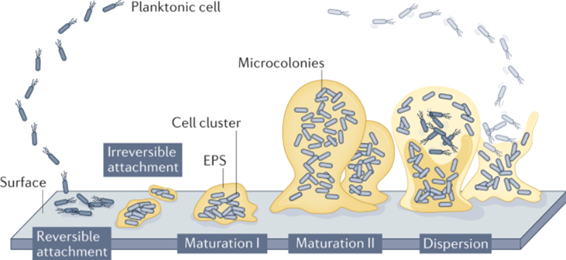
When we think of bacteria, we often imagine free-floating single cells that can be eliminated with antibiotics or disinfectants. In reality, many bacteria prefer to live in communities, called biofilms- slimy, structured layers that adhere to …
Blog: Implants associated infections: biofilms and their love for “foreign” surfaces. Read More »
Innovative approaches against bacterial infection are a vital necessity. Nowadays, most of the antibiotics on the market are targeting one single bacterial process to take them down, leading to a …
Blog: Dual-action molecules: A promising strategy to combat bacterial resistance Read More »
SSBB researchers have tested the ability of the synthetic antimicrobial peptide SET-M33 to target porcine respiratory pathogens and a collection of porcine commensal nasal microbiota members in vitro. The experiments …
Publication: SET-M33 targets the porcine respiratory pathogen G. parasuis. Read More »
As part of the SSBB Career Development Program, Saha and Ana recently spent an inspiring week at the Research Development Office (RDO) of Erasmus MC in Rotterdam. The visit offered …